Measure the routine. Then the machine.
A counter-space worksheet for the parts of coffee that product dimensions leave out.
Anyone trying to fit a coffee routine under cabinets, on a narrow counter or in a shared kitchen.
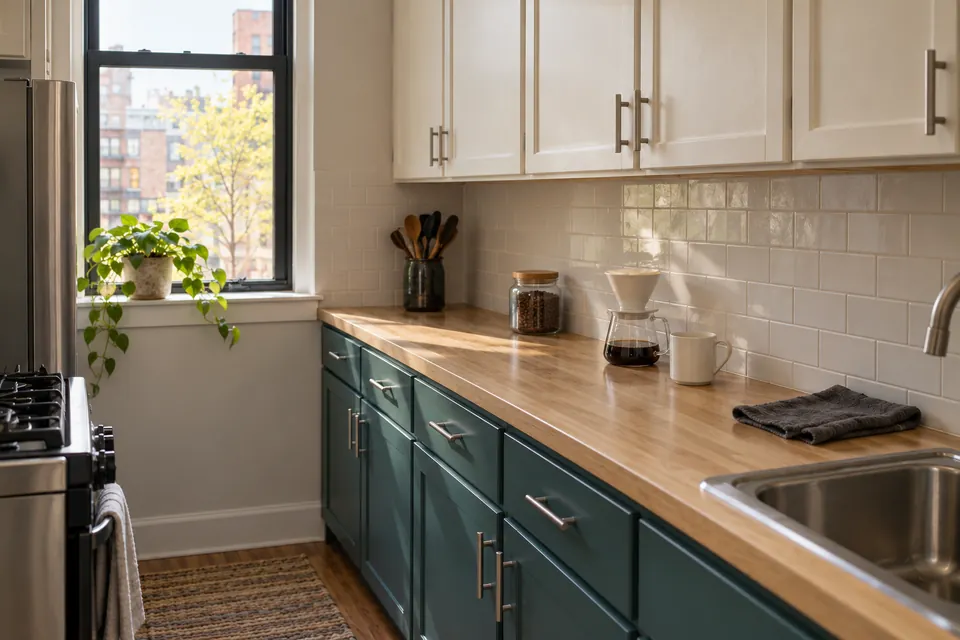
The useful distinction
A machine’s body is its storage footprint. Your coffee routine also needs space to refill, prepare, pour, remove parts and clean up. Measure both before you make a tight-space purchase.
Keep what works. If your equipment already works, rearrange and measure it before replacing it.
Measure your working space.
Enter measurements you have checked. This worksheet compares your own plan; it does not verify a machine’s fit or safety clearances.
Start with a tape measure.
Your body measurements and working-space measurements will appear here.
Also check cabinet height, lids, refill access, side movement and safe use. The diagram centers the body inside your entered working rectangle; it does not locate moving parts or verify their clearance.
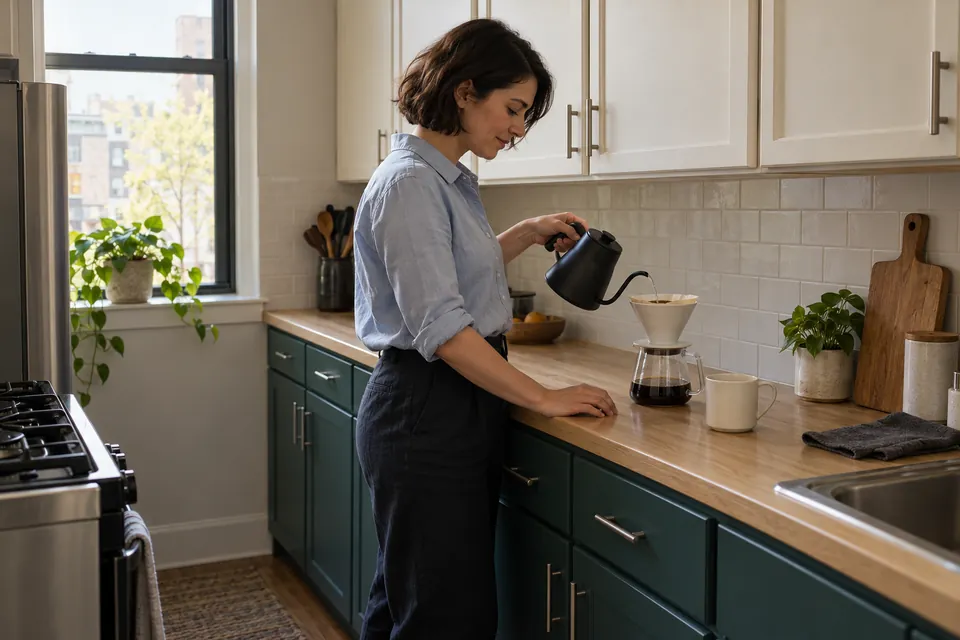
Give the whole routine a place.
Use your available counter size in the 3D planner. Add any of the ten products, move and rotate them, then check the body envelopes and the room to operate.
Open the 3D setup plannerYour worksheet above remains a record of your own body and working-space measurements. The planner keeps those notes separate from manufacturer dimensions.
Two footprints. One real routine.
First mark the equipment’s closed body: width, depth and height. Then rehearse the actions you will actually perform. A reservoir may lift upward or move backward. A steam wand needs side access. A grounds container may come out toward you. A brewer on top of a mug is taller than the brewer by itself.
There is no universal clearance number that makes every coffee machine usable. Use the actual manual and model, and measure moving parts. The diagram here is a planning aid, not a scaled product drawing.
Check the six places space disappears.
Use these checks with your own equipment or the exact US model you are considering. Measure an opening or removal path rather than assuming an empty-looking space will be enough.
- Refill: can you lift or fill the water reservoir without scraping a cabinet?
- Lids: can the brew basket or hopper open fully?
- Sides: is there room to use a steam wand or pour safely?
- Preparation: where will you dose, tamp, place a filter or set down a hot part?
- Removal: can a tray, carafe or grounds container leave the machine?
- Cleaning: where will you rinse, dry and reassemble the parts?
Permanent space is not the same as working space.
An AeroPress or V60 can leave the counter after brewing, but still needs a stable place to use it. A manual grinder can be stored away, but it needs room in your hands during each dose. An electric machine may stay put while its water, coffee and cleanup items take temporary space around it.
Separate your daily working area from your after-coffee storage area. This often reveals a useful change to a current setup without requiring another appliance.
A tight fit needs stronger evidence.
We have not measured these products in a kitchen. The Bambino’s published dimension order is unresolved in our research, so we do not give an exact-fit promise for it. Product revisions and bundles can also change what you are planning around.
When a few fractions of an inch decide the purchase, confirm the exact US model and manual, then measure the real operating paths. A catalogue number alone is not enough.
A few useful answers.
Does this tool tell me a machine will fit?
No. It records your measurements and distinguishes body size from working access. It does not verify a product’s clearances or guarantee a fit.
Should I leave everything on the counter?
Only if that suits your routine. Separate permanent equipment from the tools you can bring out for brewing and put away afterward.
Sources & limits.
Our recommendations use documents and attributed review evidence. We have not performed hands-on testing, measured clearances or compared taste ourselves.
- Manufacturer Breville Bambino BES450 - US product documentation Accessed 2026-10-12
Body dimension order conflicts with other material. No exact fit guarantee is made.
- Manufacturer De’Longhi Essenza Mini EN85B - US model Accessed 2026-10-18
Black, machine-only EN85B. US W4.3 × D12.8 × H8.1 in corroborates the EN85 dimensional diagram W110 × D325 × H205 mm. The planner uses that axis mapping; the inconsistent 84 mm manual value is excluded. Opening/removal clearances remain unmeasured.
- Manufacturer OXO Brew 8-Cup Coffee Maker Accessed 2026-10-19
Thermal-carafe 8718800. The labeled dimensional image supports W7 × D10.5 × H13.5 in for the closed body. Open-lid and refill clearances remain unmeasured.
- Manufacturer OXO Compact Conical Burr Grinder 8720800 Accessed 2026-10-13
The documented hopper capacity is up to 50 g. Body specifications do not include opening or removing components.
- Manufacturer Hario VDC dripper catalogue Accessed 2026-10-19
VDC-02W is the white ceramic size 02. Manufacturer cup-count language is not a promise of four large US mugs.
- Manufacturer AeroPress Original - manufacturer model information Accessed 2026-10-12
Original is distinct from XL, Clear and Go Plus. Chamber volume does not establish finished drink yield.
- Manufacturer Hario V60 Ceramic 02 - US model information Accessed 2026-10-12
- Manufacturer 1Zpresso J-Ultra - manufacturer documentation Accessed 2026-10-12